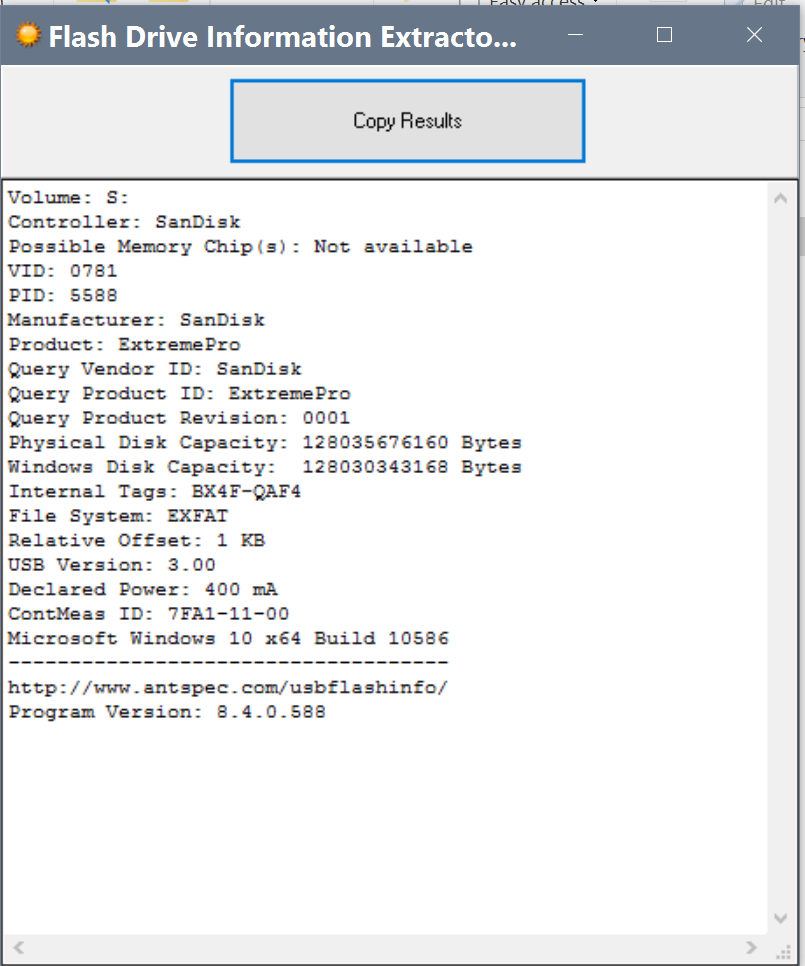
The outcome of this inquiry has been dissapointing. SanDisk seems to have taken great effort to avoid this information from being disclosed or discovered. Quite a few consumers, and virtually all IT managers, are well aware of the inferior longevity of TLC-based (i.e., 3-bit and 4-bit) NAND products as opposed to 2-bit MLC, 2-bit eMLC, or single-bit SLC. The type of NAND is a huge detail.
The drives we sampled from: Transcend, Mushkin, Samsung, Silicon Power, Corsair, and AData all either disclosed what NAND they were using, and/or did not lock down their drives to prevent users from pulling this info from a program such as ChipGenius or USBFlashInfo. ALL of these companies are producing one of more MLC-based flash drive that is both affordable and well reviewed. In the case of SanDisk, they do not disclose this information, and they have even taken this a step further to block access to this information so that we cannot use a third party program to obtain it. As far as I can tell, SanDisk also does not disclose flash drive endurance statistics.
What does this mean?
Even without factory-published endurance statistics (which are relatively rare for flash drives), knowing the controller and NAND specifics helps form a reasonably good idea of what to expect from a specific flash drive. So why has SanDisk taken such extreme action to prevent anyone from finding this info out?
Even if a huge portion of SanDisk offerings use TLC, it seems almost certain that their flagship flash drives and SD cards use premium MLC. But without being able to verify this, all you can do is take the better-safe-than-sorry assumption that everything (all the way up to the 128gb Extreme Pro) uses lesser TLC NAND. 
If SanDisk thinks this is good for business, I disagree 100%. We liked the Extreme Pro flash drive quite a lot, but, unable to verify such an important detail, the winner is the Muskin Ventura and Impact models (which use Toshiba MLC NAND.) I sincerely hope in the future that we see this practice change.